
Old is the New New
When did we as a society decide that newer is better? New shoes, new phone, new house, new spouse. Somewhere along the way, it became easier to replace instead of repair, likely in large part because, they just don’t make things like they used to. Hole in your sock? Order 6 new pairs from Amazon, and they’re on your doorstep within 24 hours. Bored with your relationship? Fire up one of dozens of apps where you can swipe, swipe, swipe your way to happiness with someone new. House needs work or your phone is 3 generations old? Let’s move into a new place, let’s buy something new, something bright and shiny, something problem-free.
To me, new or different often means trading one set of problems for another. There’s something beautiful in repairing the bent, the broken, the old. In embracing that nostalgic feeling of home, whatever that means to you. I’ve focused on this over the past several years, perhaps not with my holey socks, but with my home and the objects within.
I used to wonder why people would pick up discarded furniture or other items from the side of the road on trash day. Now you’ll find me scanning the neighborhood for treasures that can be restored and enjoyed, hopefully for years to come. A recent find is the “dumpster dresser” that sits in my office. It would have been easier to buy new, but pride in restoring this beauty and keeping it out of a landfill can’t be bought.
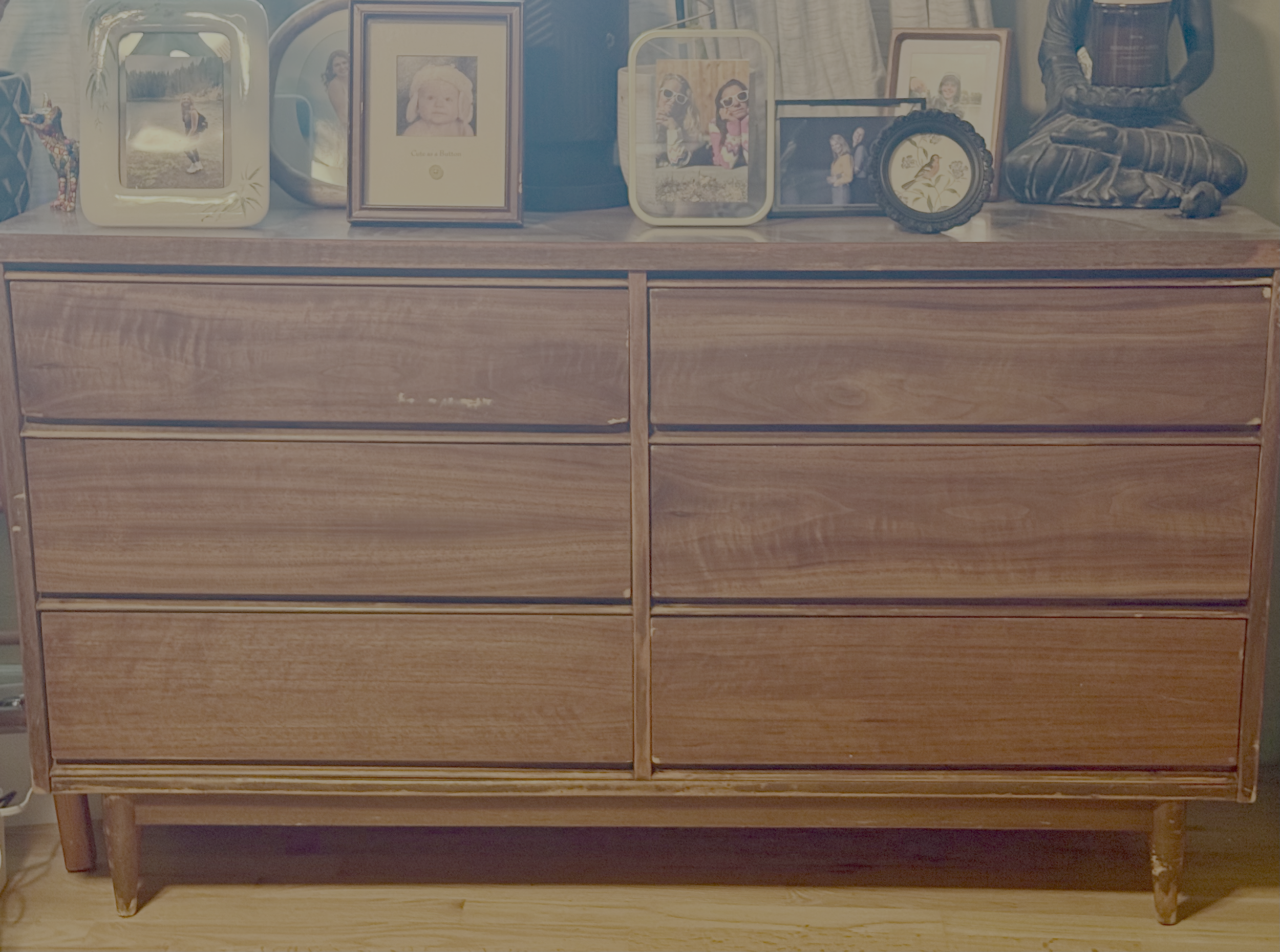
the author’s dumpster dresser.
In “retrovating” the kitchen in my 1960 ranch, I’ve often wondered what happened to the original fixtures that were removed and replaced with basic, builder-grade cabinets, countertops, and appliances, and more importantly, why? Mind you, I don’t know what the house looked like in its original state. Maybe the cabinets and countertops were beyond repair. But while demo-ing said basic cabinets, revealing crumbling particle board and peeling laminate, the thought on repeat is, “what was so wrong with the original?”
Of course, not everything old is superior. There have been potential lead paint and asbestos considerations, and as much as a true vintage refrigerator would be perfect in my space, they’re not exactly energy efficient. Maybe the answer is settling for a combination of old and new: a true vintage in-wall oven with a new refrigerator. New tile with vintage steel cabinets rescued from a lifetime in the landfill. Restoring and reusing something that already exists, paired with something off the shelf.
Perhaps once my kitchen remodel is complete, I’ll be tired of house projects that are harder than they need to be, ready to move on to buying new again. But I hope not.