
Navigating a Neurotypical World
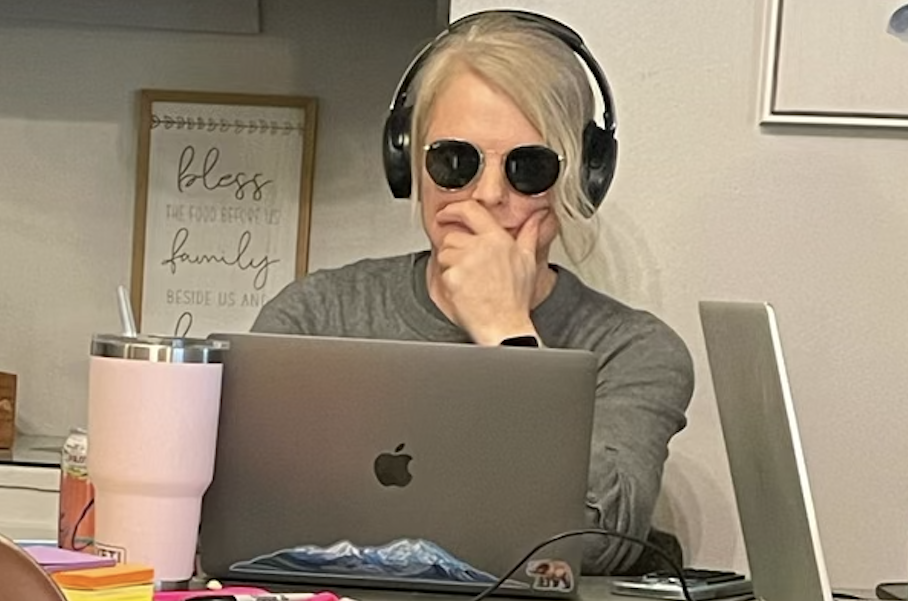
the author, during a break in an all-day meeting.
When the World Isn’t Built for You
In a world designed for neurotypical brains, the biggest personalities and loudest voices tend to drown out quieter ones. Bright lights, overwhelming scents, noisy environments, and rigid seating makes thriving in traditional workspaces challenging at best. When masking your differences becomes daily habit, exhaustion and burnout is all but inevitable.
For many neurodivergent professionals, a sensory-safe and understanding workplace isn’t just a matter of preference, it’s survival. Here is a short list of what’s worked for me.
Sensory Stimuli
If you’re working in a more traditional office and struggle with noise, smells, lighting, or other sensory overload, look for opportunities to dial down the input you’re receiving. Fidget or stim tools to distract from overwhelm, noise-reducing earplugs or over-ear headphones, shading bright overhead lighting with a hat or even sunglasses. Non-traditional? Yes, and not appropriate for every office, but small adjustments can make a big difference.
Understanding and Communicating Limits
I’ve developed a deeper awareness of my own capacity, especially in social situations. Learning to honor and clearly communicate limits has been a real game-changer. Setting expectations upfront helps me show up without burning out. This doesn’t mean never attending an event or office happy hour, it means reflecting on how much you can handle and communicating your limits.
Prioritizing Breaks and Movement
One of the hidden challenges of remote or office work is forgetting to pause and take breaks. I’ve built in daily walks with my dog that keep me grounded, energized, and focused. Our walks might be 15 minutes or 45, and are essential energy and clarity resets.
A Reminder for Everyone
Every brain, personality, and work style brings value. The goal isn’t to force yourself into environments that deplete you but to discover what makes you thrive.
If you’re an employer, remember the quiet ones are often the hidden gems. One of the most welcoming things you can do for your team is to create space for people to thrive in their own way. You don’t have to understand it, but acceptance goes a long way to ensuring a happy and healthy team.
If you’re an employee, remember that the right employer will recognize the benefit of your unique skills and work style. And if you can’t find that employer? Create your own path. Sometimes the best way forward is building something that finally fits.
Key Takeaway: Thriving as a neurodivergent professional means designing your environment and setting boundaries around what you need, not what’s expected.